
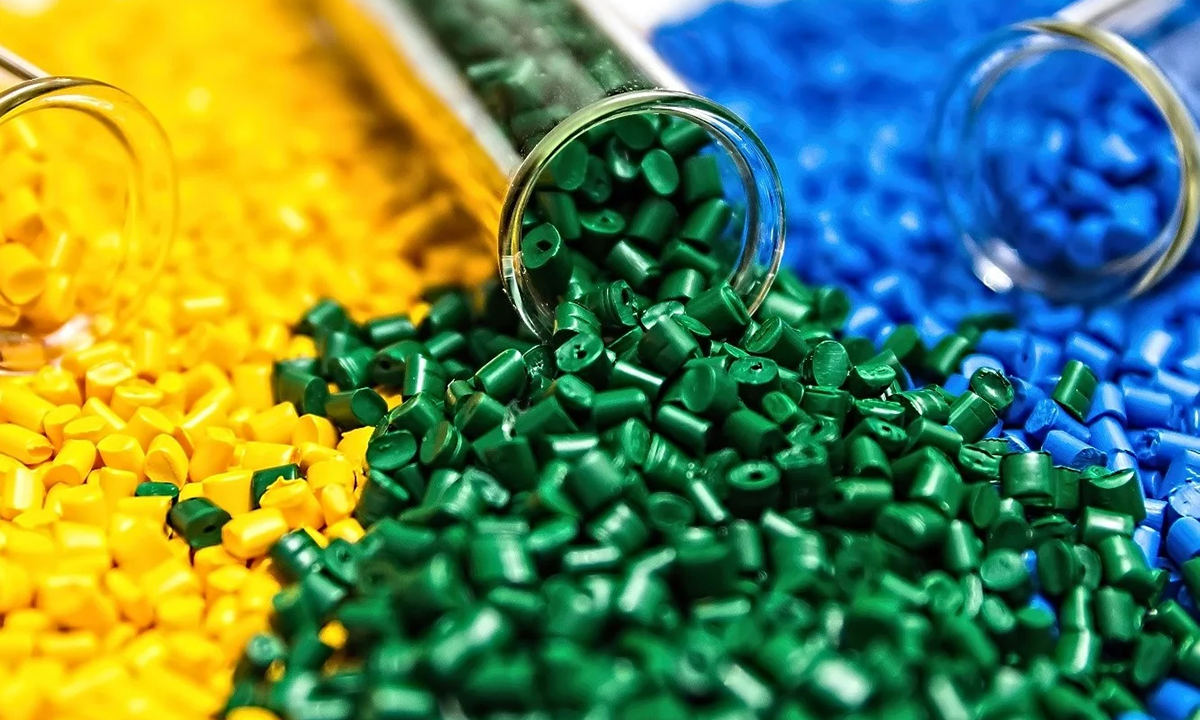
Plastic granules play a critical role in modern manufacturing. From everyday household products to high-performance industrial components, the quality and durability of plastic items depend heavily on the type, consistency, and processing of plastic granules used. While they may appear small and uniform, plastic granules directly influence strength, finish, lifespan, and performance of the final product.
Understanding how plastic granules affect product quality helps manufacturers make informed material choices, reduce defects, and ensure long-term reliability.
What Are Plastic Granules?
Plastic granules, also known as plastic pellets or resin granules, are small, uniform particles made from polymers. These granules serve as the raw material for plastic manufacturing processes such as injection molding, extrusion, and blow molding. Depending on the application, granules can be virgin, recycled, or blended with additives to enhance specific properties.
The composition and quality of these granules determine how the plastic behaves during processing and how the final product performs in real-world conditions.
Role of Plastic Granules in Product Quality
1. Material Consistency and Uniformity
High-quality plastic granules are manufactured with consistent size, shape, and polymer composition. Uniform granules melt evenly during processing, resulting in smooth flow and proper mold filling. This consistency directly impacts surface finish, dimensional accuracy, and overall appearance of the product.
Low-quality or inconsistent granules can cause uneven melting, air pockets, flow marks, or weak spots, leading to visible defects and reduced structural integrity.
2. Mechanical Strength and Performance
Plastic granules define the mechanical properties of the finished product, including tensile strength, impact resistance, flexibility, and load-bearing capacity. Engineering-grade granules are designed to withstand stress, pressure, and repeated use without cracking or deforming.
For example, granules with higher molecular weight polymers produce stronger, more durable plastic products. On the other hand, inferior granules may result in brittle or fragile items prone to early failure.
3. Resistance to Environmental Factors
Durability is strongly influenced by how plastic reacts to heat, moisture, chemicals, and UV exposure. Premium plastic granules often include stabilizers and additives that enhance resistance to environmental degradation.
Products made from poor-quality granules may fade, warp, crack, or weaken over time, especially when exposed to sunlight, extreme temperatures, or chemicals. High-grade granules ensure longer product life and consistent performance under demanding conditions.
Impact of Plastic Granules on Durability
1. Long-Term Structural Stability
Durability is not just about initial strength but also about how well a product maintains its properties over time. High-quality granules reduce internal stress during molding, which minimizes the risk of warping, shrinkage, or micro-cracks.
This stability is especially important for industrial components, automotive parts, and construction materials where long-term reliability is essential.
2. Additives and Reinforcements
Plastic granules are often enhanced with additives such as fillers, fibers, plasticizers, or impact modifiers. These additives significantly influence durability by improving flexibility, hardness, flame resistance, or impact strength.
For example, glass-filled granules increase rigidity and strength, while UV-stabilized granules improve outdoor durability. Choosing the right granule formulation ensures the product performs well throughout its intended lifespan.
3. Resistance to Wear and Tear
Products that experience repeated movement, friction, or load require granules with high wear resistance. Premium plastic granules reduce surface abrasion, cracking, and deformation caused by daily use.
Inferior granules may initially perform well but degrade quickly, leading to premature failure and higher replacement costs.
Virgin vs Recycled Plastic Granules
The choice between virgin and recycled plastic granules also affects quality and durability. Virgin granules offer predictable performance, high purity, and superior mechanical properties, making them ideal for critical applications.
Recycled granules, when properly processed and quality-controlled, can still deliver good durability for many applications while supporting sustainability goals. However, poorly processed recycled granules may contain impurities that weaken the final product.
Importance of Processing Compatibility
Even high-quality plastic granules must be compatible with the manufacturing process. Granules designed for specific molding techniques melt at controlled temperatures and flow smoothly, reducing stress and defects.
Using unsuitable granules can result in inconsistent wall thickness, weak bonding, or internal voids, all of which negatively affect product quality and durability.
Conclusion
Plastic granules are far more than just raw materials—they are the foundation of product quality and durability. The type, consistency, formulation, and processing behavior of plastic granules directly influence strength, appearance, environmental resistance, and lifespan of plastic products.
Manufacturers who invest in high-quality plastic granules benefit from improved performance, fewer defects, reduced maintenance, and greater customer satisfaction. Whether producing consumer goods or industrial components, selecting the right plastic granules is essential for delivering reliable, long-lasting products in today’s competitive market.