
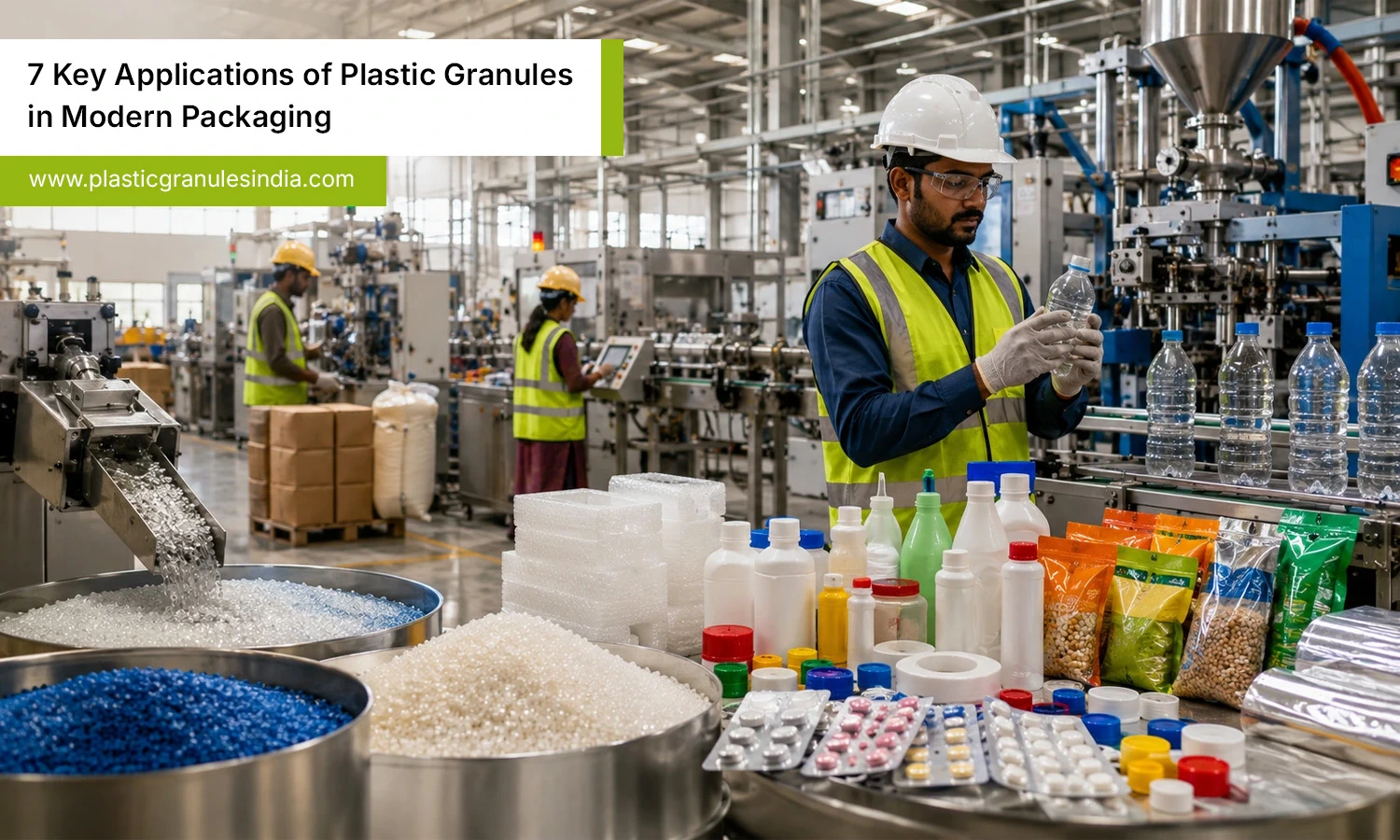
Packaging is no longer just a protective shell — it is a strategic asset. At the core of this evolution lies one of the most versatile raw materials in manufacturing: plastic granules for packaging. These small, uniform pellets of processed polymer serve as the foundational building block for a remarkable range of packaging solutions, from the simple bottle you pick up at a grocery store to the tamper-proof blister packs used in pharmaceutical supply chains. With rising demand for lightweight, durable, and cost-efficient packaging across industries, understanding how these granules are applied in real-world production is more relevant than ever.
This blog explores seven key areas where their impact is most visible and transformative.
Table of Content
Also Read: How to Start a Plastic Granules Manufacturing Business in India
Flexible Film and Pouch Packaging
One of the most widespread uses of plastic granules for packaging is in the production of flexible films and pouches. Polyethylene (PE) and polypropylene (PP) granules are melted and extruded into thin, stretchable sheets that become everything from snack bags and resealable pouches to shrink wraps and agricultural films. What makes flexible film packaging so valuable is its ability to conform to the shape of the product, reducing empty space and minimizing material usage. For food brands, this translates directly into lower logistics costs and extended shelf life due to the barrier properties embedded during the granule processing stage. Additives blended into the granule compound — such as UV stabilizers, anti-fog agents, and slip agents — allow manufacturers to fine-tune the end product’s performance without altering the core production process.
Rigid Containers and Bottles
PET (polyethylene terephthalate) granules are the backbone of the beverage and consumer goods industry. Injection stretch blow moulding transforms these granules into the clear, lightweight bottles used for water, juices, edible oils, and household cleaners. The clarity and strength that PET granules offer are unmatched by alternatives at a comparable cost point.
HDPE granules, on the other hand, are commonly used for opaque rigid containers — think detergent bottles, milk jugs, and pharmaceutical storage containers. The rigidity, chemical resistance, and impact strength derived from high-density polyethylene make it the preferred choice where product integrity during transport is non-negotiable.
Pharmaceutical Blister and Strip Packs
In pharmaceutical packaging, precision and contamination resistance are paramount. PVC and PVDC granules are processed into the rigid thermoformed trays that house tablets and capsules in blister packs. These materials provide exceptional moisture and oxygen barrier properties, which are critical to maintaining drug efficacy over time. The role of plastic granules for packaging in this sector goes beyond containment. Modern pharma packaging relies on multi-layer co-extrusion — where different granule types are combined in a single structure to achieve child-resistance, tamper-evidence, and even heat-sealed foil bonding. Each layer is engineered from specific granule formulations, making material selection a critical part of regulatory compliance.
E-Commerce and Protective Packaging
The explosion of e-commerce has created a massive demand for cushioning and void-fill packaging. Expanded polystyrene (EPS) and expanded polyethylene (EPE) start their lives as granules. These granules are expanded using steam or blowing agents to create the lightweight foam sheets, corner protectors, and moulded inserts that protect fragile goods during transit.
Beyond foam, polyolefin granules are extruded into bubble wrap and air pillow films — the ubiquitous protective materials seen in every online order. The ease with which plastic granules for packaging can be processed into a wide variety of protective formats makes them indispensable to e-commerce fulfilment operations worldwide.
Food-Grade and Barrier Packaging
Keeping food fresh while meeting stringent safety standards is a challenge that food-grade granules are specifically engineered to solve. Nylon (PA), EVOH, and LLDPE granules are co-extruded into high-barrier multilayer films used for vacuum-sealed meats, cheese, and ready-to-eat meals. Each polymer layer contributes a distinct property — one for strength, another for oxygen barrier, another for heat sealability. Food-grade plastic granules for packaging are manufactured under strict quality controls, often adhering to FDA or EU food contact regulations. They are free from harmful additives and undergo rigorous migration testing to ensure they do not contaminate the food product. For packaging engineers working in food processing, specifying the right granule grade is as important as any machine setting on the production line.
Caps, Closures, and Fitments
Every bottle needs a cap. Every tube needs a nozzle. These components — collectively known as closures and fitments — are almost universally manufactured using injection-moulded plastic granules. PP granules are the most common choice for bottle caps due to their excellent chemical resistance, rigidity, and compatibility with tamper-evident ring designs. Beyond standard screw caps, plastic granules feed into the production of flip-top closures, sports caps, child-resistant caps, and dispensing fitments. The precision with which granules can be formulated allows manufacturers to adjust melt flow index, hardness, and coloring to meet exact closure specifications. For packaging lines running at high speed, consistent granule quality directly impacts cap production yield and defect rates.
Sustainable and Recyclable Packaging Solutions
The packaging industry is under increasing pressure to reduce its environmental footprint, and plastic granules for packaging are at the centre of this conversation. Recycled granules — produced by processing post-consumer plastic waste back into uniform pellets — now serve as viable substitutes for virgin resin in many non-food packaging applications. Bio-based granules derived from sugarcane (bio-PE) or corn starch (PLA) are being adopted for single-use packaging formats where composability is a key requirement. Additionally, advances in compatibility technology mean that mixed-plastic waste can now be converted into high-quality recycled granules suitable for structural applications. Companies choosing certified recycled or bio-based plastic granules for packaging are not only addressing sustainability commitments but also responding to shifting consumer expectations and emerging Extended Producer Responsibility (EPR) regulations.
Conclusion
From the flexible pouch on your pantry shelf to the tamper-proof strip pack in your medicine cabinet, plastic granules for packaging are quietly shaping the way products reach consumers safely, efficiently, and affordably. Their versatility across applications — rigid and flexible, food-grade and industrial, virgin and recycled — is what makes them irreplaceable in modern manufacturing. As the packaging sector continues to evolve under the dual pressures of performance and sustainability, the science of granule formulation will remain at the forefront. Choosing the right material grade, understanding its processing behaviour, and aligning it with end-use requirements is the foundation of every successful packaging solution.
Explore our full range of premium plastic granules for packaging — contact our team today for samples and pricing!
Frequently Asked Questions (FAQs)
Q1: Are plastic granules for packaging safe for direct food contact applications?
Ans: Yes, food-grade plastic granules comply with FDA and EU food contact regulations, ensuring no harmful migration into food products during packaging and storage.
Q2: Can recycled plastic granules match the quality of virgin resin for packaging?
Ans: Recycled granules perform comparably to virgin resin in many non-food applications, especially when processed from clean, sorted post-consumer streams with consistent quality controls.