
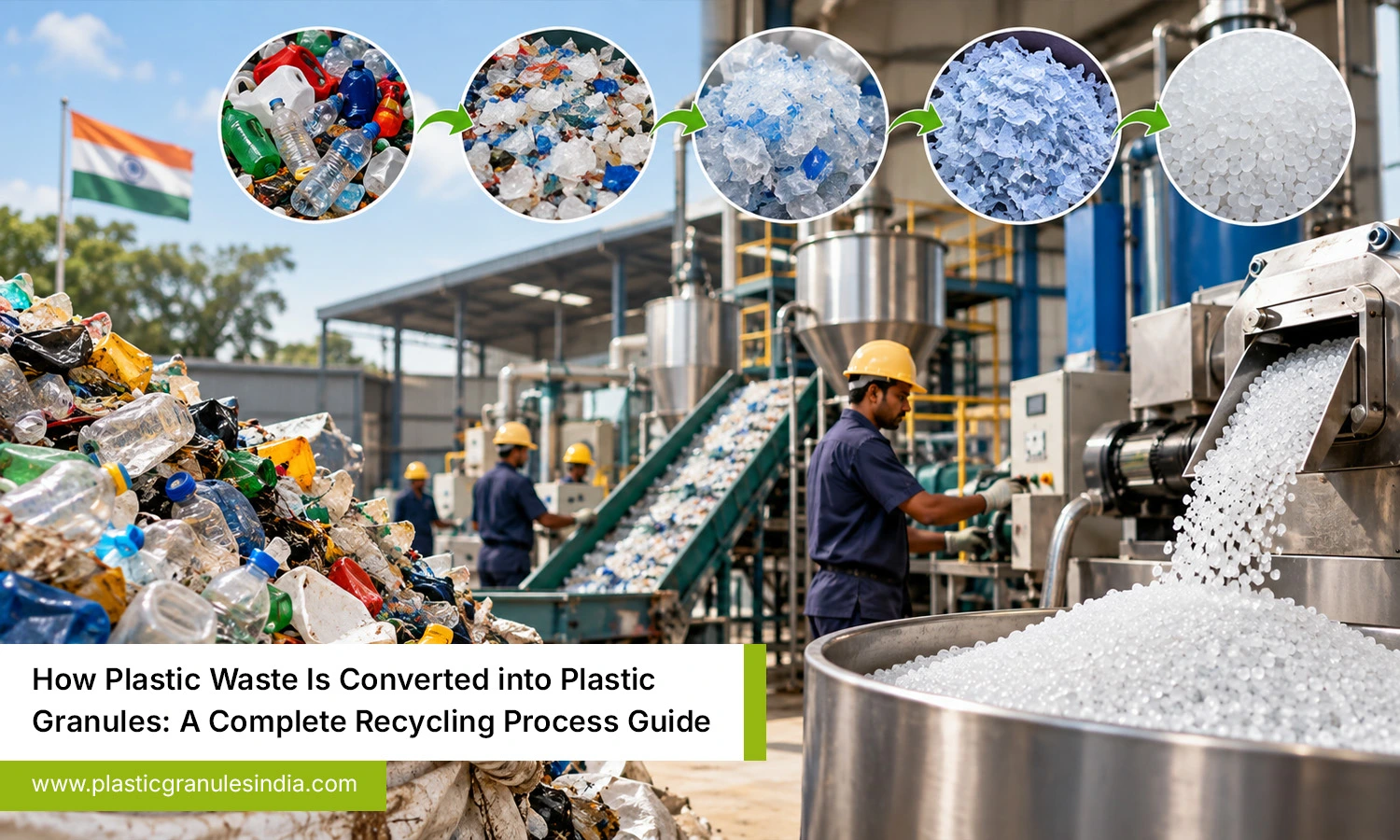
Every day, tons of plastic waste pile up in landfills, oceans, and streets, yet very little of it is put to productive use. What often goes unnoticed is that plastic waste can be recycled into high-quality raw material using a structured plastic granules production process. By converting plastic waste into reusable material, this process reduces pollution and supports industries that produce goods from recycled plastic.
In this guide, we’ll walk through each stage of turning plastic waste into usable granules, explain why this process matters, and highlight how it supports a more sustainable, circular economy.
Table of Content
Also Read: 7 Key Applications of Plastic Granules in Modern Packaging
Why Plastic Recycling Matters More Than Ever
Plastic waste has emerged as one of the biggest environmental concerns facing the world today. Landfills are overflowing, marine life is suffering, and microplastics are showing up in places nobody expected. Recycling plastic waste into granules offers a practical solution because it gives discarded material a second life instead of letting it sit in a dump for centuries.
Beyond the environmental angle, there’s a strong economic case too. Manufacturers save money by using recycled granules instead of virgin plastic resin, and recycling businesses generate revenue by supplying this material to plastic product makers. This is exactly why understanding the plastic granules production process has become important for entrepreneurs, factory owners, and environmentally conscious consumers alike.
1: Collection and Sorting of Plastic Waste
The journey begins with collecting plastic waste from various sources such as households, industries, commercial establishments, and municipal waste management systems. Once collected, the plastic is sorted based on type. This step is critical because different plastics — like PET, HDPE, PVC, LDPE, PP, and PS — have different melting points and chemical properties.
Sorting can be done manually by workers who identify plastic types by touch and appearance, or through automated systems using infrared sensors and optical scanners. Proper sorting at this stage directly affects the quality of the final granules, so recycling plants invest heavily in getting this step right.
2: Washing and Cleaning
After sorting, the plastic waste is thoroughly washed to remove dirt, labels, adhesives, food residue, and other contaminants. This washing stage usually involves multiple tanks with water and mild detergents, along with mechanical scrubbing.
Properly cleaned plastic is crucial, as remaining contaminants can reduce the quality, color, durability, and uniformity of the final plastic granules. Some recycling facilities use hot water washing for stubborn contaminants, while others rely on friction washers that scrub plastic flakes against each other to strip away grime.
3: Shredding the Plastic
Once cleaned, the plastic waste is fed into industrial shredders that break it down into small flakes or chips. Shredding increases the surface area of the plastic, making it easier to melt evenly in later stages.
This step is a core part of the plastic granules production process because uniform flake size ensures consistent melting and extrusion. Poorly shredded plastic with uneven sizes can lead to incomplete melting, resulting in granules with weak structural integrity.
4: Drying the Shredded Plastic
Even after shredding, the plastic flakes carry leftover moisture absorbed during washing. This moisture needs to be removed before the plastic moves into the melting phase, as residual water can cause bubbling, weak spots, or inconsistent texture in the final granules.
Drying is typically done using centrifugal dryers or thermal dryers that circulate hot air through the flakes. Some plants use a combination of both to ensure the plastic is completely moisture-free before proceeding.
5: Melting and Extrusion
This is the heart of the plastic granules production process. The dried plastic flakes are fed into an extruder machine, where they are melted under controlled temperatures specific to each plastic type. The molten plastic is then pushed through a die, forming long, thin strands, much like noodles.
Extrusion demands accurate temperature control, as excessive heat can damage the plastic’s molecular structure, while insufficient heat may prevent the material from melting evenly. Skilled operators monitor this stage closely, as it determines the strength and usability of the finished granules.
6: Cooling the Plastic Strands
After the molten plastic leaves the extruder, it is quickly cooled to allow the strands to solidify. This is usually done by passing the strands through a water bath or cooling conveyor. Rapid cooling helps maintain the structural quality of the plastic and prevents it from clumping together.
Cooling temperature and speed are carefully calibrated because plastics that cool too slowly may become brittle, while those cooled too quickly can develop internal stress that weakens the granules.
7: Cutting into Granules
After cooling, the solidified plastic strands are fed into a pelletizer or granulator, which cuts them into small, uniform granules. These granules are typically a few millimeters in size, resembling small beads or pellets.
Uniformity in size and shape is essential at this stage since manufacturers who purchase these granules need consistent material for their molding and production processes. This final cutting step completes the transformation from waste plastic to a usable raw material.
8: Quality Testing and Packaging
Before the granules are ready for sale or use, they undergo quality testing. This includes checking melt flow index, color consistency, moisture content, and impurity levels. Granules that don’t meet quality standards are often reprocessed or discarded.
Once approved, the granules are packed into bags or containers, ready to be shipped to plastic product manufacturers. These manufacturers use the granules to create everything from packaging materials and pipes to furniture, automotive parts, and household items.
Applications of Recycled Plastic Granules
The output of the plastic granules production process finds its way into countless everyday products. Recycled granules are used to manufacture bins, buckets, plastic furniture, pipes, automotive components, storage containers, and even textile fibers in some cases.
Industries prefer recycled granules not just for cost savings but also to meet sustainability goals and regulatory requirements around using recycled content in manufacturing.
Challenges in the Recycling Process
While the manufacturing process seems easy to understand, recycling plants often deal with complex operational challenges. Contaminated waste, mixed plastic types, and inconsistent quality of collected waste can complicate sorting and processing. Maintaining a stable extrusion temperature also demands experienced operators and properly maintained equipment. Despite these hurdles, technology is steadily improving, with better sorting sensors, automated washing systems, and efficient extruders making the entire plastic granules production process faster and more reliable than ever before.
Conclusion
Converting plastic waste into usable granules is a multi-step journey that combines careful sorting, thorough cleaning, precise melting, and controlled cutting. Each stage plays a crucial role in ensuring the final granules are strong, consistent, and ready for industrial use. As demand for sustainable materials grows, understanding this process helps businesses, recyclers, and everyday consumers appreciate the effort behind every recycled plastic product. By supporting recycling initiatives and choosing products made from recycled granules, we all contribute to reducing plastic pollution and building a cleaner, more sustainable future for generations to come.
Ready to turn plastic waste into profit? Contact our team for a trusted recycling plant today!
Frequently Asked Questions
Q1. Is recycled plastic granule quality as good as virgin plastic material?
Quality varies by process, but well-sorted, properly processed granules perform reliably in most applications.
Q2. Can I sell my factory’s plastic scrap directly to granule manufacturing units nearby?
Yes, most recycling plants purchase sorted plastic scrap directly from factories and waste collectors.
Q3. How much time is required to complete the plastic granules manufacturing process?
Each batch is typically completed within a few hours, although the exact duration depends on the machinery, material, and plant size.