
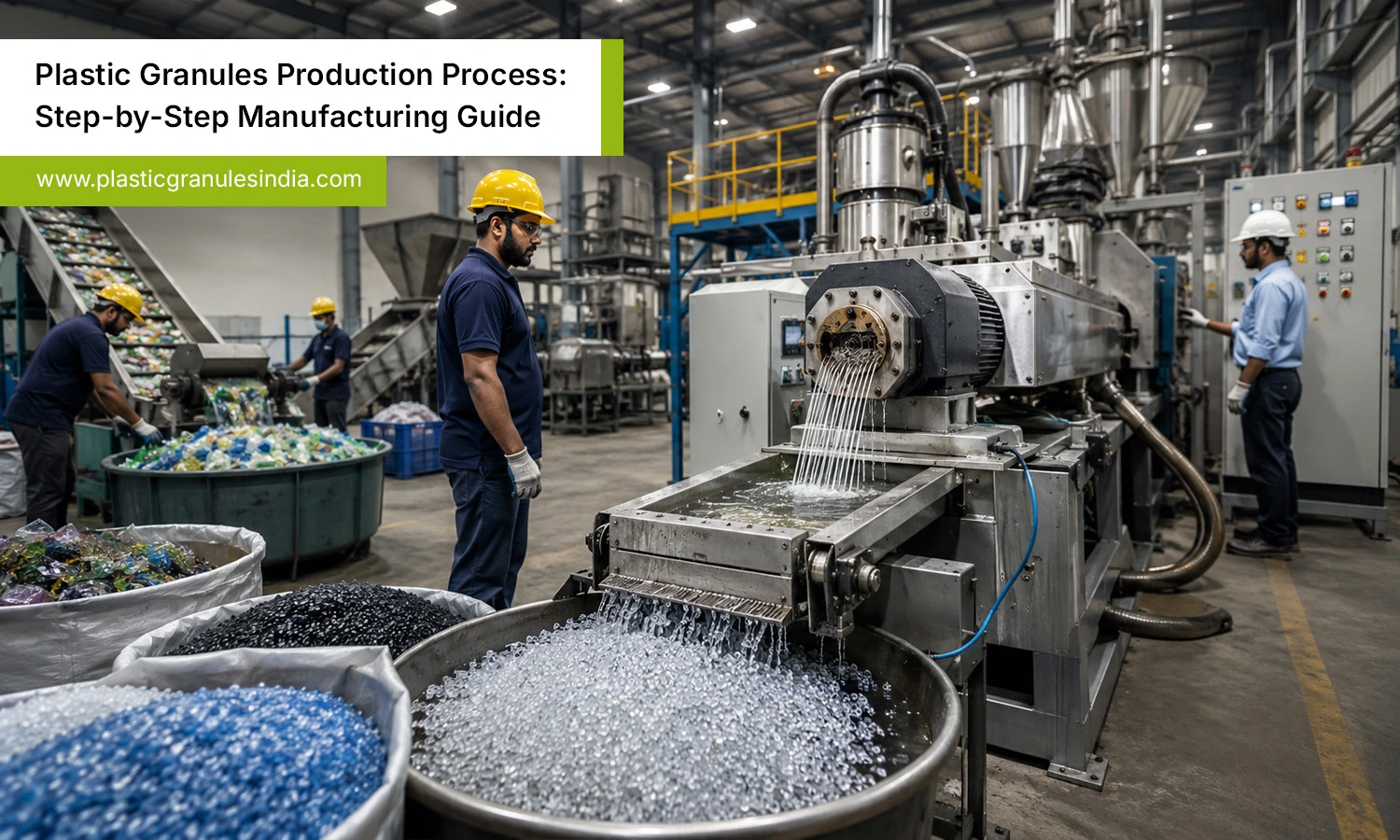
Plastic granules form the backbone of countless industries, from packaging to automotive parts. Understanding the plastic granules production process helps manufacturers, recyclers, and business owners appreciate how raw plastic transforms into usable material. This guide walks through each stage of the plastic granules production process in a simple, practical way. Whether you’re setting up a new plant, exploring recycling options, or simply curious about manufacturing, this article breaks down the journey from plastic waste or resin to finished granules. Let’s explore how this essential process works, step by step, and why it matters for sustainable production today.
Table of Content
Also Read: 7 Key Applications of Plastic Granules in Modern Packaging
What Are Plastic Granules
Plastic granules, also called plastic pellets or resin pellets, are small, uniform pieces of plastic used as raw material for manufacturing various products. They are created either from virgin plastic resins or recycled plastic waste. These granules are melted down later and molded into bottles, containers, toys, pipes, and countless other everyday items. Because granules are compact, easy to store, and simple to transport, they have become the standard input form across the plastic manufacturing industry worldwide.
Why Understanding the Manufacturing Process Matters
Understanding the plastic granules production process offers valuable insights for manufacturers, buyers, and businesses across various industries. A clear understanding of the process supports better equipment decisions, consistent quality management, and sustainable production through material recycling. A well-controlled manufacturing process reflects supplier quality and results in plastic granules that perform more effectively in finished applications. For anyone entering the plastics industry, this knowledge is foundational.
Step-by-Step Plastic Granules Production Process
Step 1: Collection and Sorting of Raw Material
The first stage in the plastic granules production process involves gathering raw plastic material. This can be virgin plastic resin or post-consumer and post-industrial plastic waste. When recycled plastic is used, sorting becomes critical. Workers or automated systems separate plastic by type, such as PET, HDPE, PP, or LDPE, since mixing different plastic types can weaken the final product’s quality. Color sorting may also occur at this stage to maintain consistency in the output.
Step 2: Cleaning and Washing
Once sorted, the plastic material moves through a thorough cleaning phase. This step removes dirt, labels, adhesives, oils, and other contaminants that could affect the melting process later. Industrial washing systems use water, sometimes combined with detergents, to strip away impurities. Removing dirt and impurities from plastic is crucial to avoid machine blockages and maintain the strength of the final granules.
Step 3: Drying the Plastic
After cleaning, the plastic material requires thorough drying to remove excess moisture before further manufacturing. Drying units use hot air or mechanical dryers to eliminate water content completely. Proper drying is essential, as remaining moisture may cause bubbles during melting and compromise the overall quality of the granules. Proper drying ensures the material is ready for the next phase of the plastic granules production process without complications.
Step 4: Shredding or Crushing
Large plastic items or bulky waste need to be broken down into smaller, manageable pieces. Industrial shredders or crushers cut the plastic into flakes or small chunks. This reduction in size makes the material easier to feed into extrusion machines and ensures uniform melting later. Shredding also increases the surface area of the plastic, which helps achieve consistent heat distribution during the melting process.
Step 5: Melting and Extrusion
This is the heart of the plastic granules production process. The shredded plastic flakes are fed into an extruder machine, which applies controlled heat and pressure to melt the material into a thick, flowing liquid. A rotating screw inside the extruder pushes the molten plastic through a die, shaping it into long, thin strands. Temperature control here is critical, as overheating can degrade the plastic’s properties, while insufficient heat prevents proper melting.
Step 6: Cooling the Extruded Strands
Once the molten plastic exits the extruder as strands, it must be cooled quickly to solidify its shape. This is typically done using a water bath or cooling conveyor system. Rapid, even cooling prevents warping and helps maintain the strength and consistency of the plastic strands before they move to the cutting stage. Proper cooling directly influences the durability of the finished granules.
Step 7: Pelletizing or Cutting
After cooling, the solidified plastic strands are fed into a pelletizer, which cuts them into small, uniform granules. This machine ensures each pellet is consistent in size and shape, which is important for downstream manufacturing processes. Uniform granules melt evenly during future production, reducing waste and improving the quality of products made from them.
Step 8: Quality Testing and Sorting
Before packaging, the granules undergo rigorous quality checks. Technicians test for moisture content, density, melting point, and overall consistency. Any granules that don’t meet the required standards are separated out and sometimes reprocessed. This quality assurance step is a vital part of the plastic granules production process, as it guarantees that only reliable material reaches the market.
Step 9: Packaging and Storage
The final stage involves packaging the granules into bags or containers, usually ranging from small sample packs to large industrial sacks. Proper storage conditions, away from moisture and extreme temperatures, help maintain the quality of the granules until they are shipped to manufacturers. Efficient packaging also makes transportation and inventory management easier for suppliers and buyers alike.
Key Factors That Affect Granule Quality
Several elements influence how well the plastic granules production process turns out. Raw material purity, machine calibration, temperature control during extrusion, and cooling speed all play significant roles. Manufacturers who invest in modern equipment and maintain strict quality control protocols typically produce granules with better consistency, strength, and performance across various applications.
Sustainability and Recycling Considerations
Many manufacturers now incorporate recycled plastic into their granule production to reduce environmental impact. Using recycled material lowers dependency on virgin resin, cuts down landfill waste, and supports circular economy practices. While recycled granules may require additional sorting and cleaning steps, the environmental and cost benefits make this approach increasingly popular across the plastics industry.
Conclusion
The plastic granules production process is a carefully structured journey that transforms raw or recycled plastic into a versatile, reusable material. From sorting and cleaning to melting, cooling, and quality testing, each step plays a crucial role in determining the final product’s performance. Businesses that understand this process can make smarter decisions about equipment, suppliers, and sustainability practices. As demand for recycled and high-quality plastic materials grows, mastering this manufacturing process becomes even more important. Whether you’re a manufacturer, recycler, or industry newcomer, this step-by-step knowledge equips you to navigate the plastics production landscape confidently.
Ready to source high-quality plastic granules? Contact our team today for reliable supply!
Frequently Asked Questions (FAQs)
Q1. How long does the entire plastic granules production process usually take?
It typically takes a few hours, depending on machinery efficiency and batch size.
Q2. Can recycled plastic waste produce the same quality granules as virgin resin?
Yes, with proper cleaning and sorting, recycled granules can match virgin resin quality closely.
Q3. What industries commonly purchase plastic granules after production?
Packaging, automotive, construction, textiles, and consumer goods industries widely purchase plastic granules regularly.