
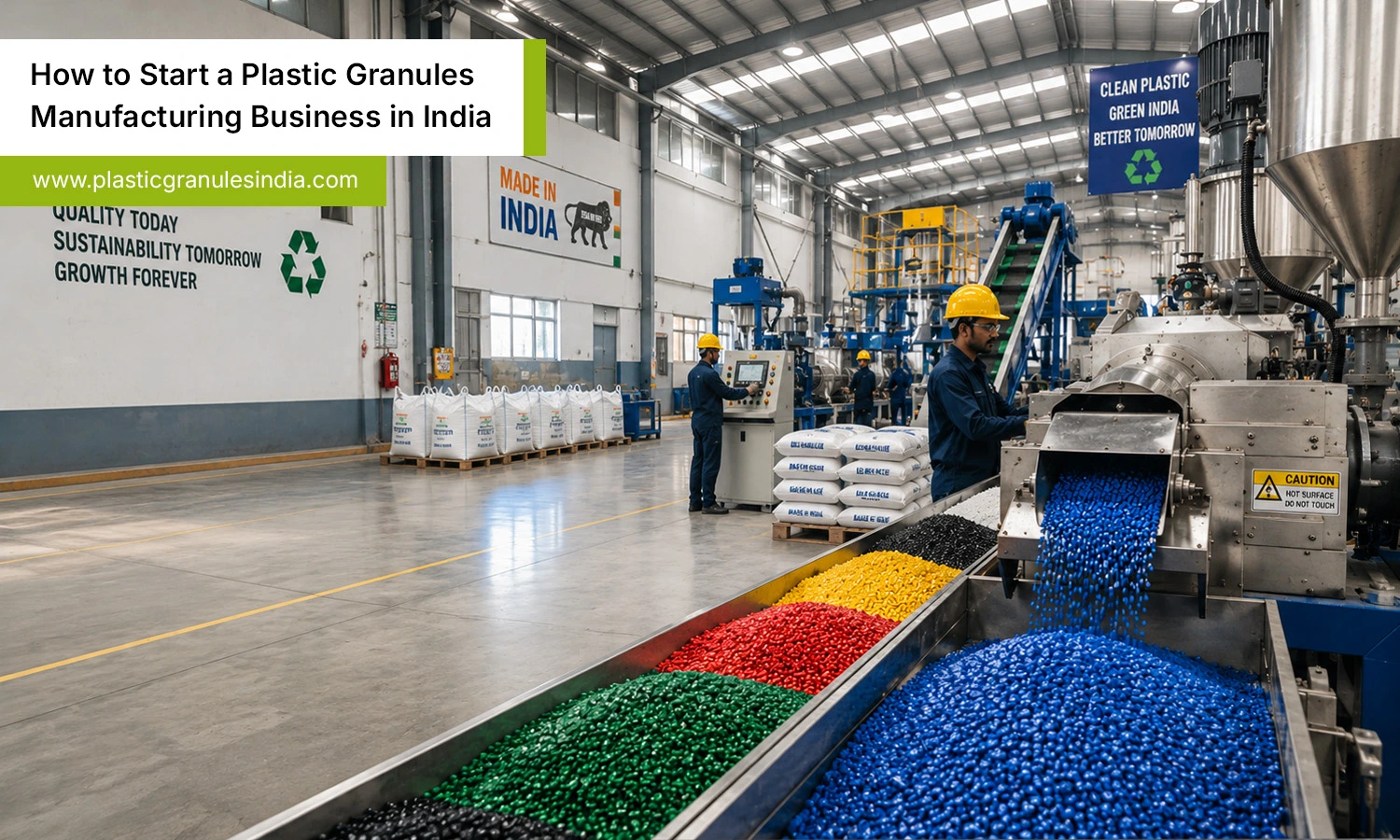
India’s manufacturing sector is growing quickly, opening doors for new business opportunities across multiple industries. Plastic granules play a vital role in this growth, serving as the base material for products used in packaging, agriculture, construction, automotive, and electronics. With increasing demand for plastic products, setting up a plastic granules manufacturing unit can be a profitable and scalable venture. However, success depends on more than just purchasing equipment and starting production. Careful planning, reliable raw material sourcing, the right factory location, quality standards, legal compliance, and efficient operations are all essential for long-term profitability. This guide covers the key steps to help you establish a successful plastic granules manufacturing business in India.
Table of Content
-
- Why the Plastic Granules Business Makes Sense in India?
- Types of Plastic Granules You Can Manufacture
- Step-by-Step Guide to Starting a Plastic Granules Manufacturing Business
- Investment and Profitability Overview
- Marketing and Selling Your Plastic Granules
- Key Challenges to Anticipate
- Conclusion
- Frequently Asked Questions (FAQs)
Also Read: Plastic Dana Manufacturer and Supplier in Delhi: A Complete Guide for Industrial Buyers
Why the Plastic Granules Business Makes Sense in India?
India’s appetite for plastic products continues to grow, creating strong opportunities for plastic granule manufacturers. As fifth of the world’s largest consumers of plastic, the country sees consistent demand from industries such as FMCG packaging, construction, textiles, automotive, and consumer goods. Both virgin and recycled granules are widely used, with the recycling segment gaining particular momentum due to increasing sustainability efforts. Government supportive policies, expanding infrastructure, and growing investments in recycling innovation have created favorable conditions for industry growth. With 3.5 million tones of plastic waste generated each year, businesses that enter the recycled granules segment today can benefit from a growing market, recurring demand, and long-term growth potential.
Types of Plastic Granules You Can Manufacture
Before setting up a plastic granules factory setup, the first step is identifying the type of granules you plan to produce. Each category serves different industries and comes with its own investment requirements, production process, and profit potential.
- Virgin Plastic Granules: Produced from newly manufactured polymers such as PE, PP, PVC, and ABS. These granules are commonly used in applications where product quality, strength, and consistency are essential.
- Recycled Plastic Granules: Manufactured by processing post-consumer or industrial plastic waste into reusable raw material. They are cost-effective and widely preferred by industries looking to reduce production expenses while supporting sustainability.
- Color Masterbatch Granules: Specialized granules containing concentrated pigments and additives that help manufacturers achieve uniform color during plastic product manufacturing.
The ideal choice depends on several factors, including your available investment, target customer base, local demand, and access to reliable raw material sources. Evaluating these factors early can help you build a more profitable and sustainable business.
Step-by-Step Guide to Starting a Plastic Granules Manufacturing Business
1. Analyze Markets and Create Business Plans
A successful plastic granules business begins with thorough market research. Assess the competitive landscape, determine your key customer segments, gauge market demand, and track fluctuations in raw material and granule pricing. These insights help you make informed investment and production decisions.
Your business plan should clearly outline:
- Estimated startup and operational costs
- Planned production capacity ( in tones per month)
- Sales, marketing, and distribution approach
- Estimated time to achieve profitability and recover initial investment.
A well-structured business plan not only provides direction for your operations but also improves your credibility when seeking financial support from banks, lenders, or potential investors.
2. Register Your Business and Obtain Licences
Before commencing operations, plastic manufacturing units must obtain the necessary registrations, permits, and statutory approvals to ensure full regulatory compliance in India:
- Business Registration – Register as a Proprietorship, Partnership, LLP, or Private Limited Company based on your scale.
- GST Registration – Required for manufacturing units once their turnover exceeds the prescribed regulatory threshold.
- MSME/Udyam Registration – Qualifies you for government subsidies and priority lending.
- Pollution Control Board (PCB) NOC – Required because plastic processing involves emissions and effluents.
- Factory Licence – Under the Factories Act, if you employ more than 10 workers with electricity.
- Fire Safety Certificate – Especially important given the flammable nature of plastic materials.
Securing all required approvals beforehand helps maintain uninterrupted operations and minimizes the risk of regulatory issues or business disruptions for your plastic granule factory setup.
3. Finalize Your Location and Infrastructure
Choosing a suitable factory location is an important step in the setup process. Industrial parks and approved manufacturing zones such as MIDC or SIDCO are often preferred due to their infrastructure and regulatory advantages. For a mid-sized operation, consider a facility with:
- Space: 2,000–5,000 sq. ft. for small to medium-scale operations
- Power Supply: Stable three-phase electricity with at least 30–60 KVA load capacity
- Water Supply: Needed for the cooling conveyor system
- Storage Area: For raw material stock and finished goods warehouse
- Ventilation: Proper exhaust systems to manage heat and fumes
Leasing reduces upfront investment costs, preserves capital, and improves financial flexibility during initial operations.
4. Purchase Machinery and Equipment
The equipment required to establish a plastic granules manufacturing plant represents the most significant capital expenditure:
| Machine | Function |
| Plastic Shredder / Crusher | Breaks down waste plastic into flakes |
| Washing & Drying Unit | Cleans raw material (for recycled granules) |
| Extruder Machine | Melts and processes plastic into strand form |
| Pelletizer / Die-face Cutter | Cuts strands into uniform granule pellets |
| Cooling Conveyor | Cools hot granules before packaging |
| Vibrating Screen / Sieve | Separates granules by size |
| Packaging Machine | Weighs and bags finished granules |
Small-scale manufacturers can start with one single-screw extruder and pelletizer, typically costing between ₹8 lakh and ₹15 lakh. Businesses targeting larger output capacities often invest ₹40–60 lakh or more in advanced twin-screw extrusion machinery. Partner with trusted equipment manufacturers and prioritize professional setup along with adequate workforce training.
5. Source Your Raw Materials
Virgin plastic granules are produced using primary polymer resins, including HDPE, LDPE, PP, and PET, which are typically procured from major petrochemical manufacturers such as IOCL, GAIL, and Reliance Industries.
Recycled granule manufacturers can source plastic waste from:
- Ragpickers and scrap dealers
- Industrial scrap from factories
- Municipal solid waste segregation units
Keeping production running without delays requires a consistent and trustworthy source of raw materials.
6. Hire Skilled Workers and Train Them
A small-scale plastic granules unit generally operates with a team of 6 to 12 employees, including machine operators, quality control staff, loaders, and administrative personnel. Hiring nearby workers lowers expenses, and machinery vendors usually offer essential training support.
7. Set Up Quality Control and Testing
Maintaining consistent product quality is essential in the plastic granules industry. Buyers often evaluate granules based on factors such as Melt Flow Index (MFI), tensile strength, color uniformity, moisture levels, and purity. A basic in-house testing facility can improve quality control, strengthen customer confidence, and minimize product rejections.
Investment and Profitability Overview
| Business Scale | Estimated Investment | Monthly Revenue Potential |
| Small Scale | ₹15–25 Lakhs | ₹8–12 Lakhs |
| Medium Scale | ₹40–75 Lakhs | ₹25–40 Lakhs |
| Large Scale | ₹1–3 Crores | ₹80 Lakhs+ |
Profit margins in recycled granule manufacturing typically range between 15–25%, while virgin granule trading margins depend heavily on polymer market fluctuations.
Marketing and Selling Your Plastic Granules
Once your plastic granules factory setup is operational, take action on these sales channels:
- Direct B2B Sales – Approach plastic product manufacturers in your region directly.
- IndiaMART / TradeIndia Listings – Most plastic buyers actively source from these B2B portals.
- Exhibitions and Trade Fairs – Industry events such as PlastIndia help connect with potential buyers, suppliers, and business partners.
- Distributor Network – Partner with regional distributors or sales representatives to expand your presence across multiple markets.
- Overseas Markets – India supplies large quantities of plastic granules to importers in Southeast Asia, Africa, and the Middle East.
Key Challenges to Anticipate
- Raw Material Price Volatility: Polymer prices fluctuate with global crude oil prices. Maintain 15–30 days’ stock as a buffer.
- Pollution Compliance: PCB inspections can be frequent. Invest in proper ventilation and effluent management from day one.
- Competition: The granules market is competitive. Differentiate through consistent quality, timely delivery, and pricing flexibility.
- Power Outages: Install a backup generator to avoid production downtime in regions with unstable electricity.
Conclusion
Starting a plastic granules manufacturing business in India is a well-proven path to building a scalable and sustainable enterprise. With industrial demand increasing year-on-year and recycling regulations gaining momentum, this sector offers excellent long-term prospects for serious entrepreneurs. Success in establishing a plastic granules manufacturing unit depends on a well-structured approach, including selecting a suitable site, purchasing reliable equipment, meeting all regulatory requirements, and developing long-term relationships with customers. Whether you start small with recycled granules or go full-scale with virgin polymer processing, the opportunity is real, the market is large, and the time to start is now.
Your plastic granules empire starts with one bold decision — make that decision today, not tomorrow, Contact us now for top Guidance.
Frequently Asked Questions (FAQs)
Q1. How much land do I actually need to start a plastic granules factory setup?
A modest 2,000 sq. ft. industrial space is sufficient to begin small-scale granule production comfortably.
Q2. Can I start this business without prior plastic manufacturing experience or technical knowledge?
Yes, machine suppliers offer complete training; hiring an experienced manager also bridges the technical knowledge distance.
Q3. Is government financial assistance available specifically for a new plastic granules factory setup?
Eligible plastic manufacturing businesses can access MSME financing, PMEGP assistance, and state-level incentives.